Xbox doesn’t need to stop evolving. It needs to figure out what it’s evolving into.
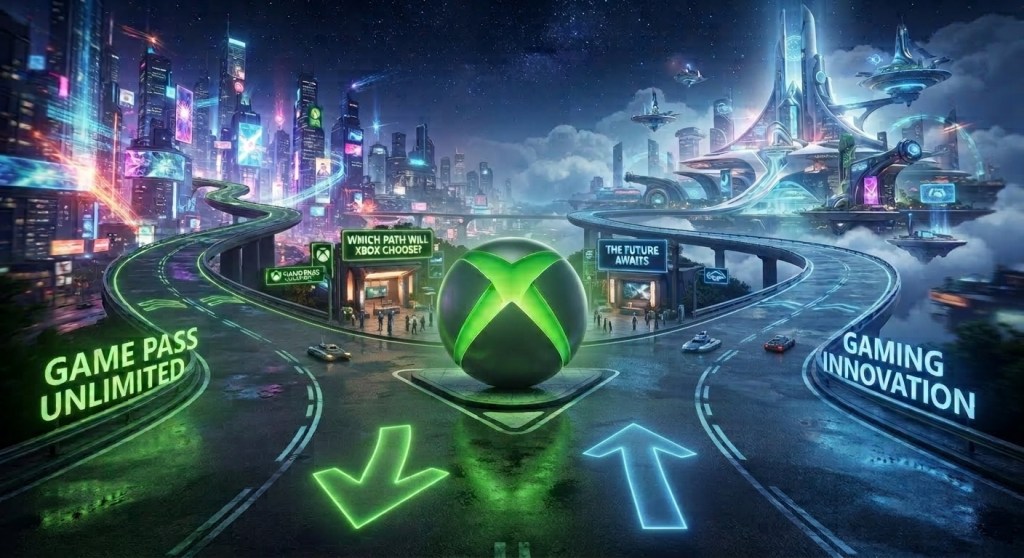
What are we doing, Xbox?
Seriously, we keep making strides forward only to turn around and set ourselves back with decisions that leave fans scratching their heads. For a company that has been in the video game business for decades, you would think we would have a better understanding of what Xbox is supposed to be by now.
Instead, Xbox reminds me of Jackie Chan in Who Am I? We have a brand that seems to be constantly searching for its identity, and every time I think we are getting closer to figuring it out, something happens that makes me question everything all over again.
Don’t get me wrong. I still support Xbox. I still want to see the brand succeed. But supporting something doesn’t mean I have to agree with every decision it makes.
And right now, I think Xbox needs to sit down, take a good look in the mirror, and figure out what it wants to accomplish over the next ten years.
The Hardware Is Good. So What’s the Problem?
Let’s start with the hardware.
The Xbox Series X and Series S are good machines. They offer different price points, provide access to a massive gaming library, and give players options depending on their budgets and gaming needs. There is plenty to appreciate about what Microsoft has built.
Then we get to the ASUS ROG Xbox Ally.
The idea behind the Xbox Ally is exciting. Take the Xbox experience, put it into a handheld form factor, and give players the ability to enjoy their games away from the television. The growing Xbox Play Anywhere library is another step in the right direction, allowing supported games to follow players between compatible devices.
But here’s my question: wouldn’t it be even better if we could simply access our existing native Xbox console libraries on a handheld Xbox device?
Think about how convenient that would be. I have spent years building a digital library on Xbox. I’ve purchased games, collected achievements, invested time into different franchises, and built my gaming experience around this ecosystem.
When I pick up another Xbox-branded device, I want that experience to follow me.
Now, I understand that PC hardware and Xbox console hardware operate differently. Not every console game can simply be dropped onto a Windows-based handheld and expected to work perfectly. Compatibility, optimization, licensing, and technical limitations are real concerns.
But that’s precisely why Microsoft needs a clearer long-term strategy.
Xbox Play Anywhere is a good foundation, but it isn’t the same thing as universal compatibility with every game in your existing console library. Microsoft should be working toward making the transition between console, handheld, and PC as seamless as possible.
If Xbox wants to become an ecosystem instead of just a console manufacturer, then the library needs to be at the center of that experience.
Don’t just sell me another piece of hardware. Give me another way to enjoy the games I’ve already invested in.
That’s the kind of convenience that could make the Xbox ecosystem worth sticking with for years to come.
Game Pass: Great for Gamers, But What About the Business?
Now let’s talk about Game Pass.
I’m not going to sit here and pretend Game Pass is a bad idea. It isn’t. Having access to a large collection of games through a subscription can be an incredible value, especially for players who enjoy trying different titles without paying full price for every game.
Day-one releases have been one of the biggest selling points of the service. The ability to play a major first-party release as part of your subscription instead of purchasing it separately is a powerful argument for signing up.
But I keep coming back to one question: at what point does that value proposition begin working against the business?
Let’s say a major release arrives with a $70 or $80 price tag. A player who wants to own that game outright can purchase it at launch. Another player can subscribe to a qualifying Game Pass tier and play it as part of the service, provided the game is included.
From the consumer’s perspective, the decision is pretty easy. Why spend $70 or $80 on a single game when a subscription gives you access to that game alongside a much larger catalog?
That’s a fantastic deal for the customer.
But Microsoft still has to make the economics work.
Game development is expensive. Marketing is expensive. Maintaining online services, supporting studios, and producing major releases all require money. And while subscriptions provide recurring revenue, Microsoft still has to ensure that its pricing, subscriber numbers, retention, and game sales combine to produce a sustainable business.
The challenge isn’t simply that Game Pass offers too much value. The challenge is making sure that value translates into a healthy business over the long term.
What happens when a player subscribes for one big release, finishes it, and cancels? What happens when a player who might have purchased a game at full price decides that a subscription is all they need?
Those are questions Microsoft needs to answer with more than subscriber numbers.
I would like to see Xbox create a business model that encourages people to subscribe while still giving players a compelling reason to purchase and own their favorite games.
Maybe that means offering different benefits for people who buy games outright. Maybe it means developing more attractive upgrade packages, expansions, and optional content without compromising the value of the base game.
The point is that Xbox needs to find a balance.
A great deal for gamers is only a great long-term strategy if the business behind it can sustain itself.
Exclusives Matter. Yes, They Really Do.
Here we go. This is where I know some people might disagree with me.
Exclusives matter.
They matter because gaming has always been about more than just the hardware sitting underneath your television. It’s about the experiences that convince you to buy that hardware in the first place.
Nintendo understands this.
I was born in 1986, and Nintendo was already establishing itself as a major force in gaming during the 1980s. Decades later, the company continues to build its identity around its own hardware, its own franchises, and experiences that players associate directly with Nintendo.
You buy Nintendo hardware because you want to play Nintendo games.
Mario. Zelda. Metroid. Kirby. And, yes, Star Fox. Anybody ready for another proper Star Fox adventure?
Nintendo has its own philosophy. The company has taken criticism over its decisions, release schedules, hardware choices, and the direction of certain franchises. Yet it continues to develop games that give people a reason to pay attention to its platforms.
Nintendo doesn’t need every game to appeal to every player. It needs enough compelling experiences to make its ecosystem desirable to the people who love what it does.
That’s an important distinction.
Xbox, on the other hand, has spent years expanding its reach across platforms. There are legitimate reasons for doing that. Releasing games on additional platforms can introduce franchises to new audiences, increase sales opportunities, and help Microsoft reach players who might never purchase an Xbox console.
I’m not saying Xbox should never release a game elsewhere. There are situations where multiplatform releases make perfect sense.
But if Xbox wants people to continue buying Xbox hardware, it needs to give them compelling reasons to do so.
Otherwise, what exactly are we selling?
If the games that define Xbox are available everywhere, and the primary advantages of the console become convenience, services, and price, then Microsoft needs to make those advantages strong enough to compete against everything else on the market.
That’s a difficult position to be in when competitors have established identities and recognizable franchises of their own.
Imagine what a consistent lineup of must-play Xbox exclusives could do for the brand. Imagine a generation where players could look at Xbox and know that certain experiences would be worth owning the hardware for.
That doesn’t mean every game has to stay exclusive forever. It means Xbox should have a clear group of flagship franchises that help define its identity and give players a reason to invest in its ecosystem.
You can expand your audience without losing sight of the people who made your brand successful in the first place.
Xbox Needs to Take a Page Out of Nintendo’s Book
Here’s where I think Xbox could learn something valuable.
Nintendo knows what it wants to be.
It has its own approach to hardware, its own recognizable franchises, and a history of building experiences around those franchises. It can take risks, experiment with different ideas, and release games when it believes they’re ready.
Not every decision is going to please every fan. That’s inevitable. But Nintendo has an identity that players can recognize.
Xbox has the resources, studios, technology, and franchises to establish that same kind of clarity without copying Nintendo’s business model entirely.
I want Xbox to embrace what makes Xbox different.
Give us a strong lineup of first-party games. Make those games excellent. Establish a release strategy that players can understand. Build Game Pass around a sustainable business model. And make sure the hardware offers something meaningful beyond being another way to access games that people can play elsewhere.
Most importantly, commit to the plan.
One of the most frustrating things about Xbox is that it often feels as though the company is trying to solve several different problems at once by changing direction.
One minute, the conversation is about selling consoles. Then it’s about subscriptions. Then it’s about expanding to other platforms. Then it’s about a future where the Xbox experience isn’t tied to one particular device.
Some of these ideas can absolutely coexist. In fact, I believe they should.
But they need to work together under one clear vision.
Xbox can sell consoles, offer subscriptions, release selected games on competing platforms, and build handheld experiences. The question is how those decisions support one another rather than undermine each other.
Nintendo offers a useful example of what it means to have a recognizable identity. Xbox needs to develop its own version of that consistency.
So, What Should Xbox Do Going Forward?
If I were looking at the future of Xbox, I would focus on four things.
1. Make the Xbox ecosystem feel connected.
The console, PC, and handheld experience should work together as seamlessly as possible. Xbox Play Anywhere is a useful start, but Microsoft should continue investing in compatibility, cross-device progression, cloud options, and access to existing libraries wherever technically feasible.
2. Build a sustainable Game Pass strategy.
Keep the service attractive, but make sure its pricing and benefits support the cost of producing major games. Encourage subscriptions without making traditional game ownership feel pointless.
3. Establish a stronger first-party identity.
Give Xbox players a consistent lineup of high-quality games that define the brand. Not every franchise needs to be exclusive forever, but Xbox should have flagship experiences that make its hardware worth buying.
4. Stop treating every new direction like a replacement for the last one.
Xbox doesn’t need to abandon everything it has built. It needs to decide how its hardware, subscriptions, software, and multiplatform strategy fit together, then commit to that vision long enough for players to believe in it.
These aren’t overnight fixes. They require planning, investment, patience, and a willingness to accept that not every decision will produce immediate results.
But that’s what building a long-term gaming brand requires.
Xbox, It’s Time to Grow Up
I still believe in Xbox. That’s why these decisions frustrate me.
I want to see the company succeed. I want to see great games, better hardware experiences, and a future where owning an Xbox means something beyond having access to a subscription service.
I want to see Xbox stop looking like a company that is constantly asking itself what it should become and start acting like a company that knows exactly what it wants to accomplish.
And to be clear, I’m not saying Xbox can’t do both. I’m not saying it has to choose between subscriptions and game sales, or between consoles and other platforms. There are ways to make all of these things work together.
But that takes focus.
Shawn Layden’s comments about the importance of exclusives have been part of a much larger conversation about the future of the console business. Regardless of where you stand on his position, the underlying question is worth asking: what makes a platform worth investing in when its defining games are no longer tied to it?
Xbox needs a compelling answer.
The goal is to make money. We all understand that. Microsoft is a business, and it has every right to explore different ways to reach customers and generate revenue.
But making money in the video game business requires more than chasing the next opportunity. It requires building trust, establishing an identity, and giving customers reasons to keep coming back.
Xbox has the foundation. It has the franchises. It has the technology. It has a community of players who still want to see it succeed.
Now it needs the direction.
Put on your big-boy clothes, Xbox. Make a decision. Commit to it. Give the people who support you something to believe in, and see the plan through.
Because at some point, the question stops being what Xbox could be.
The question becomes what Xbox is actually willing to do to get there.
And I’d really like to see it figure that out.
AshdrowGaming — Real Gaming Without The Hype.

